
Our goal is to give you the tools and confidence you need to improve your finances. Although we receive compensation from our partner lenders, whom we will always identify, all opinions are our own. Credible Operations, Inc. NMLS # 1681276, is referred to here as "Credible."
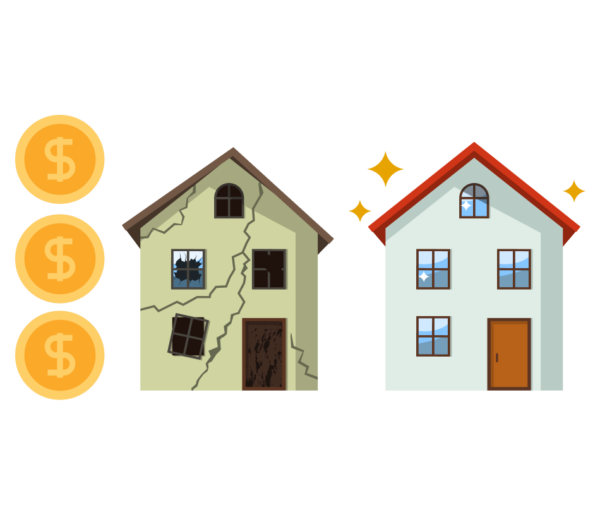
Dealing with an unexpected home repair can be a stressful and frustrating experience. Unlike home improvements or renovations that can be planned for, home repairs tend to be emergencies that need to be fixed ASAP.
In this case, a home repair loan could help you get the funds you need to cover the expense.
Here’s what you should know about home repair loans:
- Home repair personal loans
- 5 types of home repair loans
- How much will a home repair personal loan cost?
- How to apply for a home repair personal loan
- How to qualify for a home repair personal loan
- Are home repair loans tax deductible?
- Are there any government grants available for home repairs?
- What is the Weatherization Assistance Program (WAP)?
- Do I need a home improvement loan instead?
Home repair personal loans
A home repair loan is a type of personal loan that you can use to pay for critical home repairs. Home repair loans can come in handy for situations such as a broken HVAC system, burst pipe, faulty roof, and other circumstances that affect the condition of your house. While this kind of loan can be similar to a home improvement loan, home repair loans might come with faster funding to help you quickly cover the needed repairs.
Before you take out a home repair loan, it’s important to shop around and compare your options from as many lenders as possible. This way, you can find the right loan for your needs.
Here are Credible’s partner lenders that offer personal loans for home repairs:
| Lender | Fixed rates | Min. credit score | Max. loan amounts |
|---|---|---|---|

Credible Rating
 Credible lender ratings are evaluated by our editorial team with the help of our loan operations team. The rating criteria for lenders encompass 78 data points spanning interest rates, loan terms, eligibility requirement transparency, repayment options, fees, discounts, customer service, cosigner options, and more. Read our full methodology.


| 6.25% - 36.0% APR | Not disclosed by lender | $50,000 |
|
|||

Credible Rating
Credible lender ratings are evaluated by our editorial team with the help of our loan operations team. The rating criteria for lenders encompass 78 data points spanning interest rates, loan terms, eligibility requirement transparency, repayment options, fees, discounts, customer service, cosigner options, and more. Read our full methodology.

| 9.95% - 35.99% APR | 550 | $35,000** |
|
|||

Credible Rating
Credible lender ratings are evaluated by our editorial team with the help of our loan operations team. The rating criteria for lenders encompass 78 data points spanning interest rates, loan terms, eligibility requirement transparency, repayment options, fees, discounts, customer service, cosigner options, and more. Read our full methodology.
| 8.24% - 18.99% APR | 730 | $50,000 |
|
|||

Credible Rating
Credible lender ratings are evaluated by our editorial team with the help of our loan operations team. The rating criteria for lenders encompass 78 data points spanning interest rates, loan terms, eligibility requirement transparency, repayment options, fees, discounts, customer service, cosigner options, and more. Read our full methodology.
| 6.99% - 35.99% APR | 600 | $35,000 |
|
|||

Credible Rating
Credible lender ratings are evaluated by our editorial team with the help of our loan operations team. The rating criteria for lenders encompass 78 data points spanning interest rates, loan terms, eligibility requirement transparency, repayment options, fees, discounts, customer service, cosigner options, and more. Read our full methodology.
| 7.99% - 24.99% APR | 660 | $35,000 |
|
|||

Credible Rating
Credible lender ratings are evaluated by our editorial team with the help of our loan operations team. The rating criteria for lenders encompass 78 data points spanning interest rates, loan terms, eligibility requirement transparency, repayment options, fees, discounts, customer service, cosigner options, and more. Read our full methodology.
| 6.53% - 35.99% APR | 660 | $40,000 |
|
|||
Credible Rating
Credible lender ratings are evaluated by our editorial team with the help of our loan operations team. The rating criteria for lenders encompass 78 data points spanning interest rates, loan terms, eligibility requirement transparency, repayment options, fees, discounts, customer service, cosigner options, and more. Read our full methodology.
| 7.99% - 35.99% APR | 660 | $36,500 |
|
|||

Credible Rating
Credible lender ratings are evaluated by our editorial team with the help of our loan operations team. The rating criteria for lenders encompass 78 data points spanning interest rates, loan terms, eligibility requirement transparency, repayment options, fees, discounts, customer service, cosigner options, and more. Read our full methodology.

| 6.49% - 24.89% APR with autopay | 700 | $100,000 |
|
|||

Credible Rating
Credible lender ratings are evaluated by our editorial team with the help of our loan operations team. The rating criteria for lenders encompass 78 data points spanning interest rates, loan terms, eligibility requirement transparency, repayment options, fees, discounts, customer service, cosigner options, and more. Read our full methodology.
| 11.99% - 35.99% APR | None | $20,000 |
|
|||

Credible Rating
Credible lender ratings are evaluated by our editorial team with the help of our loan operations team. The rating criteria for lenders encompass 78 data points spanning interest rates, loan terms, eligibility requirement transparency, repayment options, fees, discounts, customer service, cosigner options, and more. Read our full methodology.
| 8.49% - 17.99% APR | 700 | $50,000 (depending on loan term) |
|
|||

Credible Rating
Credible lender ratings are evaluated by our editorial team with the help of our loan operations team. The rating criteria for lenders encompass 78 data points spanning interest rates, loan terms, eligibility requirement transparency, repayment options, fees, discounts, customer service, cosigner options, and more. Read our full methodology.
| 8.99% - 35.99% APR | 640 | $50,000 |
|
|||

Credible Rating
Credible lender ratings are evaluated by our editorial team with the help of our loan operations team. The rating criteria for lenders encompass 78 data points spanning interest rates, loan terms, eligibility requirement transparency, repayment options, fees, discounts, customer service, cosigner options, and more. Read our full methodology.
| 8.74% - 35.49% APR10 | Does not disclose | $100,000 |
|
|||

Credible Rating
Credible lender ratings are evaluated by our editorial team with the help of our loan operations team. The rating criteria for lenders encompass 78 data points spanning interest rates, loan terms, eligibility requirement transparency, repayment options, fees, discounts, customer service, cosigner options, and more. Read our full methodology.
| 11.69% - 35.99% APR7 | 560 | $50,000 |
|
|||

Credible Rating
Credible lender ratings are evaluated by our editorial team with the help of our loan operations team. The rating criteria for lenders encompass 78 data points spanning interest rates, loan terms, eligibility requirement transparency, repayment options, fees, discounts, customer service, cosigner options, and more. Read our full methodology.
| 7.74% - 35.99% APR | 600 | $50,000 |
|
|||

Credible Rating
Credible lender ratings are evaluated by our editorial team with the help of our loan operations team. The rating criteria for lenders encompass 78 data points spanning interest rates, loan terms, eligibility requirement transparency, repayment options, fees, discounts, customer service, cosigner options, and more. Read our full methodology.
| 6.6% - 35.99% APR4 | 620 | $50,000 |
|
|||
Learn More: Need a $10,000 Personal Loan? Follow This Process to Get It Fast
5 types of home repair loans
Personal loans can be a great option for homeowners seeking to pay for home repairs. With a personal loan, you can find a lender that offers interest rates and repayment terms that suit your unique financial situation. Plus, because most personal loans are unsecured, you won’t have to put your home up for collateral.
In addition to home repair loans, other options are available to pay for home repairs. Here are a few alternatives to consider as well as how they compare to personal loans for home repair:
| Loan amount | Average interest rate | Repayment terms | Time to fund | |
|---|---|---|---|---|
| Personal loans | $600 to $100,000 (with Credible partner lenders) | Fixed rates from:
6.25%+
(with Credible partner lenders) | 1 to 7 years (depending on the lender) | 1 to 7 business days (depending on the lender) |
| Home equity loan | Up to 85% of the equity in your home (some lenders might have lower restrictions) | Fixed rates from APR: 5.36% | Up to 30 years (generally 5, 10, or 15 years) | Up to 2 to 4 weeks |
| HELOC | Up to 75% to 85% of your home’s value (minus what you still owe on your first or second mortgage) | Variable rates from APR: 5.36% | Up to 20 years or more (typically 10-year draw period) | Up to 2 to 4 weeks |
| Cash-out-refinance | Up to 80% of your home’s value (minus what you still owe on your mortgage) | Varies depending on credit history and lender | 15 to 30 years | Up to 2 to 4 weeks |
| Credit cards | Up to $100,000 or more (depending on the card issuer) | Variable rates from APR: 16.22% | N/A (revolving credit) | Could be immediate |
Traditional personal loan
Best for: Borrowers with good credit who need money quickly
With a personal loan, you can typically borrow $600 to $100,000 (or more) to pay for home repairs or almost any other personal expense. Most personal loans are unsecured, which means you don’t have to worry about collateral.
Personal loans are a great option for borrowers who have good to excellent credit. You’ll typically need a good credit score to qualify for a personal loan with a low interest rate. However, you can improve your chances of getting approved for a loan by applying with a cosigner with good credit. Also keep in mind that if you need to borrow more money, you’ll have to apply for another loan.
Pros
- Fast loan funding compared to other options
- Fixed interest rates
- Usually don’t require collateral
Cons
- Could be hard to qualify if you don’t have good credit
- Can have higher interest rates compared to other options
- Shorter repayment periods than other options
Home equity loan
Best for: Homeowners with at least 15% to 20% equity in their homes who don’t need funds immediately
If you’re a homeowner, you might be able to tap into your home’s equity with a home equity loan. Like a personal loan, you’ll get the money from a home equity loan as a lump sum to use how you wish.
Because this type of loan is secured by your house, interest rates on home equity loans are often lower than personal loan rates. However, this also means your home could be at risk if you can’t keep up with your payments.
With a home equity loan, it can take anywhere from two weeks to two months to get your funds. If you opt for this type of loan, make sure that you don’t need the money immediately.
Pros
- Lower fixed rates than personal loans
- Repayment terms from 15 to 30 years
- Can potentially deduct home equity loan interest from taxes if funds are used for home repairs or improvements
Cons
- Risk of foreclosure
- Longer application and funding process
- Closing costs and fees
Home equity line of credit
Best for: Homeowners with at least 15% to 25% equity in their homes who need continual access to funds
Another option to tap into your home’s equity is with a home equity line of credit (HELOC). Unlike a home equity loan, a HELOC is a type of revolving credit, which means you can repeatedly draw on and pay off your credit line — similar to a credit card. This can be useful if you’re not sure exactly how much your home repairs will be.
Keep in mind that HELOCs usually come with a five- to 10-year draw period, after which you’ll no longer be able to withdraw funds.
Additionally, because a HELOC is secured by your home, they can come with lower rates than other revolving credit lines like credit cards — but this also means you risk losing your house if you can’t make your payments.
Pros
- Allows for repeated borrowing
- Lower interest rates than other revolving credit
- Potential tax benefits
Cons
- Risk of foreclosure
- Variable interest rates that can fluctuate
- Closing costs and fees
Cash-out refinance
Best for: Homeowners with good credit who plan to stay in their house long term
With a cash-out refinance, you can pay off your existing mortgage with a larger mortgage and use the remaining funds (minus any closing costs) how you see fit.
Depending on the equity in your home, you might be able to get a much higher amount of cash this way than you would with a personal loan or credit card.
Cash-out refinances tend to have low fixed interest rates because they’re secured by your home. However, this also means you risk losing your house if you default on the loan. Also keep in mind that you can expect to pay similar closing costs and fees to what you would on a traditional mortgage.
Pros
- Low fixed interest rate
- Potentially high loan amount
- Longer repayment terms (15 to 30 years)
Cons
- Risk of foreclosure
- Could be hard to qualify if you don’t have good credit
- Comes with closing costs and fees
Credit cards
Best for: Borrowers who need to pay for a small repair or several repairs over time
If you only need to cover a small home repair or make several repairs over time, a credit card might be a good option. With a credit card, you’ll have access to a credit line that you can repeatedly draw on and pay off without a specific repayment period.
Some credit cards offer a 0% APR introductory period, which means you can avoid paying any interest if you can repay your balance before this period ends. But you’ll typically need good credit to qualify for a 0% APR credit card.
And keep in mind that if you can’t pay off the card in time, you could be stuck with some hefty interest charges — and credit cards usually come with higher interest rates compared to other options.
Pros
- 0% APR introductory offer (with some cards)
- Allows for repeated borrowing
- Might offer rewards or other perks
Cons
- Can have high variable interest rates
- Can come with fees (such as annual or cash-advance fees)
- Could tempt you to rack up debt
The type of loan you opt for will largely depend on how quickly you need money, your credit score, and the equity you have in your home. Personal loans can be a great option for borrowers with good credit who need money quickly, while home equity loans and HELOCs may be a better option for borrowers who need access to funds for a longer amount of time. Be sure to shop around to ensure you find the right loan for your needs.
Check Out: Personal Loan vs. Credit Card
How much will a home repair personal loan cost?
The cost of a home repair personal loan will vary depending on the interest rate you qualify for and repayment term you choose. In general, the better your credit, the lower your interest rate — and the less you’ll pay for a home repair loan overall.
Before you borrow, you can estimate how much you’ll pay for a loan using our personal loan calculator below.
Enter your loan information to calculate how much you could pay
With a $ loan, you will pay $ monthly and a total of $ in interest over the life of your loan. You will pay a total of $ over the life of the loan.
Need a personal loan?
Compare rates without affecting your credit score. 100% free!
Checking rates won’t affect your credit score.
How to apply for a home repair personal loan
If you’re ready to apply for a home repair personal loan, follow these steps:
- Research and compare lenders. Be sure to shop around and compare as many personal loan lenders as possible to find the right loan for your situation. Consider not only interest rates but also repayment terms, any fees the lender charges, and eligibility requirements.
- Pick the right loan for you. After you’ve compared lenders, choose the loan that will work best for you.
- Complete the application. Once you’ve picked a lender, you’ll need to fill out a full application and submit any required documentation, such as tax returns or pay stubs.
- Get your funds. If you’re approved, the lender will have you sign for the loan so the funds can be released to you. The time to fund for a personal loan is usually about one week — though some lenders will fund loans as soon as the same or next business day after approval.
Learn More: Where to Get a $20,000 Personal Loan Fast
How to qualify for a home repair personal loan
While eligibility criteria for a home repair personal loan can vary by lender, here are a few common requirements you’ll likely come across:
- Good credit: Most lenders require borrowers to have good to excellent credit — a good credit score is usually considered to be 700 or higher. Several lenders offer personal loans for bad credit, but these loans typically come with higher interest rates than good credit loans.
- Verifiable income: Lenders want to see that borrowers can afford to repay the loan. Some have a minimum required income you’ll have to meet while others don’t — but in either case, you’ll likely have to provide proof of income. Keep in mind that certain lenders offer personal loans for low-income borrowers that could be easier to qualify for if you don’t make much money.
- Low debt-to-income ratio: Your debt-to-income (DTI) ratio is the amount you owe each month in debt payments compared to your income. To qualify for a personal loan, you’ll typically need a DTI ratio of 40% or less — though some lenders might require a lower ratio than this.
Personal loan cosigners
If you’re struggling to get approved for a personal loan, consider applying with a cosigner who has good credit to improve your chances. Not all lenders allow cosigners on personal loans, but some do.
Here are Credible’s partner lenders that allow cosigners for personal loans:
| Lender | Fixed rates | Loan amounts |
|---|---|---|
|
Credible Rating
Credible lender ratings are evaluated by our editorial team with the help of our loan operations team. The rating criteria for lenders encompass 78 data points spanning interest rates, loan terms, eligibility requirement transparency, repayment options, fees, discounts, customer service, cosigner options, and more. Read our full methodology.
| 6.25% - 36.0% APR | $7,500 to $50,000 |
|
||
|
Credible Rating
Credible lender ratings are evaluated by our editorial team with the help of our loan operations team. The rating criteria for lenders encompass 78 data points spanning interest rates, loan terms, eligibility requirement transparency, repayment options, fees, discounts, customer service, cosigner options, and more. Read our full methodology.
| 11.99% - 35.99% APR | $1,500 to $20,000 |
|
||
|
Credible Rating
Credible lender ratings are evaluated by our editorial team with the help of our loan operations team. The rating criteria for lenders encompass 78 data points spanning interest rates, loan terms, eligibility requirement transparency, repayment options, fees, discounts, customer service, cosigner options, and more. Read our full methodology.
| 8.49% - 17.99% APR | $600 to $50,000 (depending on loan term) |
|
||
Even if you don’t need a cosigner to qualify, having one could get you a better interest rate than you’d get on your own. Just keep in mind that your cosigner will be on the hook if you can’t make your loan payments.
Check Out: How to Get a Personal Loan With a 600 Credit Score
Are home repair loans tax deductible?
Unfortunately, no. To deduct loan interest on a home repair loan, the loan must be secured by the taxpayer’s primary residence. Since home repair personal loans are generally unsecured, their interest isn’t tax-deductible.
Learn More: Capital Improvements: Your Guide to Tax-Deductible Renovations
Are there any government grants available for home repairs?
No, there aren’t any government grants that you can use for home repairs. However, you might qualify for one of the various federal loans or programs available for homeowners, such as:
- An HUD Title 1 Property Improvement Loan, which must be used to substantially protect or improve the basic utility or livability of a property
- The 203(k) Rehabilitation Mortgage Insurance Program, which allows homebuyers and homeowners to borrow an additional $35,000 with their mortgage for home repairs or improvements
You can find the appropriate contact information for your state at USA.gov.
Check Out: Need a $5,000 Personal Loan? Follow This Process to Get It Fast
What is the Weatherization Assistance Program (WAP)?
The federal government offers grants to low-income families via the Weatherization Assistance Program (WAP). These grants help homeowners reduce their energy bills and save money by improving the energy performance of their homes. Weatherization services can also improve the livability and safety of a home.
To be eligible for WAP, you must:
- Be a resident of the state you apply in
- Need help with energy costs
- Be at or below 200% of the poverty income guidelines (or receive Supplemental Security Income or Aid to Families with Dependent Children)
Keep in mind that states will generally give preference to households with:
- People over the age of 60
- One or members with a disability
- Children
- High energy use
Learn More: Getting a Loan with No Credit: 5 Loans for New Borrowers
Do I need a home improvement loan instead?
A home improvement loan is another type of personal loan that you can use to pay for home improvements. Depending on the improvements you make, you might be able to increase the value of your home, such as by:
- Increasing the square footage
- Cutting your energy bill
- Remodeling for modernity
- Boosting curb appeal
If you could greatly increase the value of your home and can afford to repay a loan, then a home improvement loan might be worth it.
While both types of loans could potentially be worthwhile, it’s important to consider whether you truly need to make the improvements or repairs and if the resulting loan payments will fit comfortably in your budget.
If you decide to take out a personal loan to pay for home repairs or improvements, remember to consider as many lenders as you can to find the right loan for you. Credible makes this easy: You can compare your prequalified rates from multiple lenders in two minutes — without affecting your credit.
Ready to find your personal loan?
Credible makes it easy to find the right loan for you.
Find My Rate
Checking rates won’t affect your credit
Keep Reading: Should You Refinance to Pay for Home Improvements?
About Rates and Terms: Rates for personal loans provided by lenders on the Credible platform range between 5.20%-35.99% APR with terms from 12 to 144 months. Rates presented include lender discounts for enrolling in autopay and loyalty programs, where applicable. Actual rates may be different from the rates advertised and/or shown and will be based on the lender’s eligibility criteria, which include factors such as credit score, loan amount, loan term, credit usage and history, and vary based on loan purpose. The lowest rates available typically require excellent credit, and for some lenders, may be reserved for specific loan purposes and/or shorter loan terms. The origination fee charged by the lenders on our platform ranges from 0% to 12%. Each lender has their own qualification criteria with respect to their autopay and loyalty discounts (e.g., some lenders require the borrower to elect autopay prior to loan funding in order to qualify for the autopay discount). All rates are determined by the lender and must be agreed upon between the borrower and the borrower’s chosen lender. For a loan of $10,000 with a three year repayment period, an interest rate of 7.99%, a $350 origination fee and an APR of 11.51%, the borrower will receive $9,650 at the time of loan funding and will make 36 monthly payments of $313.32. Assuming all on-time payments, and full performance of all terms and conditions of the loan contract and any discount programs enrolled in included in the APR/interest rate throughout the life of the loan, the borrower will pay a total of $11,279.43. As of October 9, 2023, none of the personal loan lenders on our platform require a down payment nor do they charge any prepayment penalties.